
Yes, you can put a log burner in a summerhouse, but it needs careful planning. A summerhouse log burner can make a garden building feel warm, cosy and usable beyond the warmer months, but it is not as simple as placing a stove in the corner and cutting a hole for a flue.
A summerhouse is usually a timber structure, often smaller and lighter than a main home. That means fire safety, ventilation, stove size, hearth protection and flue design all matter. The point is not just to make the room look inviting. It has to be safe to heat, easy to use and sensible for the building.
At Eden Landscapes, we look at garden buildings as part of the wider outdoor space, from the structure itself to the base, access, layout and surrounding landscaping. The heating choice should suit the building, not work against it.
Is a summerhouse log burner a good idea?
A log burner can work beautifully in the right summerhouse. It can turn a fair-weather garden room into a more inviting space for reading, hobbies, entertaining or quiet evenings away from the main house.
That said, it is not right for every building.
Many summerhouses are compact. A stove that looks small in a showroom can still be too powerful for a modest timber room. If the space overheats quickly, you may end up opening doors and windows, which rather defeats the point of adding a stove in the first place.
If you are still choosing the building itself, our range of summerhouses is a useful starting point for comparing styles, roof shapes and layouts before thinking about heating.
Before choosing a log burner, think about:
- The internal size of the summerhouse
- Whether the walls, floor and roof are insulated
- Where the stove could safely sit
- How the flue would pass through the roof or wall
- Whether the building has enough ventilation
- How close the structure is to fences, planting or other buildings
- Where dry logs would be stored
The main thing to remember is this: the stove must suit the summerhouse, not just the look you have in mind.
What rules apply to a log burner in a summerhouse?
Any fixed solid fuel appliance needs to be treated seriously. UK guidance on combustion appliances and fuel storage systems covers areas such as air supply, flues, hearths and protection from fire risk.
HETAS explains that many domestic solid fuel, wood and biomass appliance installations are subject to Building Regulations, and that most work is notifiable to the relevant local authority. A HETAS Registered Installer can self-certify eligible work, rather than the customer applying separately for a Building Notice.
For a summerhouse, the safest route is to speak to a qualified stove installer before buying the appliance. Garden buildings vary widely in wall thickness, roof finish, insulation, door type and available floor space. A professional can confirm whether the structure is suitable, what hearth and shielding are needed, and how the flue should pass safely through the roof or wall.
Do you need planning permission for a flue?
You should not assume a flue is automatically permitted. Rules can depend on the building, the height and position of the flue, and any restrictions that apply to the property.
This is especially important if the flue will be visible, close to a boundary or unusually tall. It is much easier to check before work starts than to correct a poorly planned installation later. For a wider context, the Planning Portal gives useful guidance on planning permission for flues, chimneys and pipes.
Smoke control rules may also affect what you can burn. In some areas, you may need to use an exempt appliance or authorised fuel, so it is worth checking the relevant smoke control area rules before choosing a stove.
Summerhouse log burner safety checklist
| Safety point | Why it matters |
| Stove size | A small room can overheat quickly if the stove output is too high. |
| Hearth | The stove needs a suitable non-combustible base. |
| Wall protection | Timber walls may need shielding or a fire-rated board. |
| Flue route | The flue must remove fumes safely and maintain clearances. |
| Ventilation | The stove needs enough air for safe combustion. |
| Carbon monoxide alarm | CO cannot be seen, smelled, or tasted. |
| Fuel storage | Logs must stay dry and away from direct stove heat. |
| Certification | Proper sign-off may matter for compliance and insurance. |
Choosing the right stove size
Bigger is not better in a summerhouse. An oversized stove can make the room uncomfortable and may encourage poor burning habits, such as running the stove too low for too long.
A qualified installer should calculate the right heat output based on the room size, insulation and construction. For many summerhouses, a small, efficient stove will be more suitable than a standard room-sized model.
You should also check whether the stove is suitable for the fuel you plan to burn and whether it meets any smoke control requirements that apply.
Planning the hearth, wall protection and flue
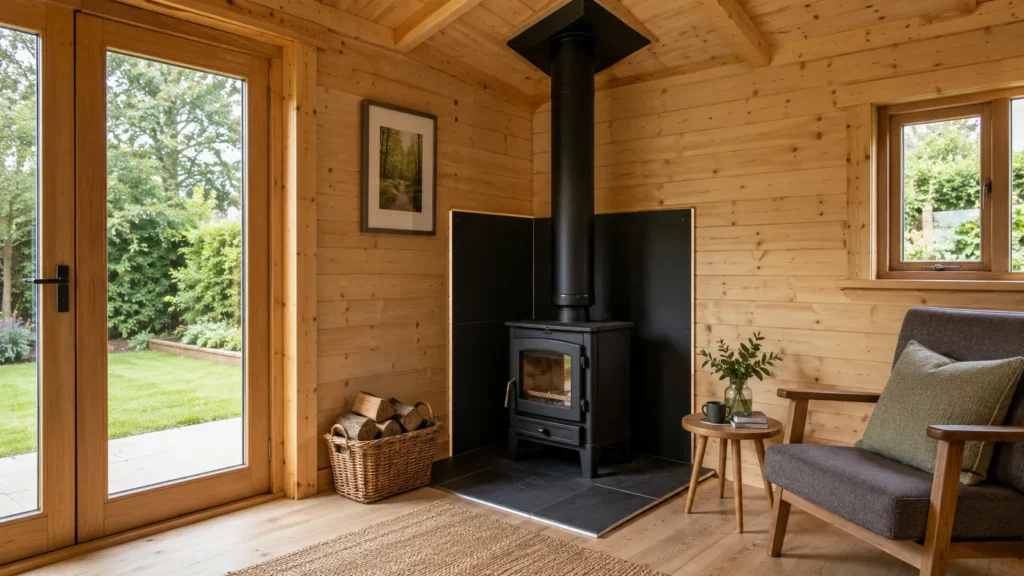
A summerhouse is usually made from timber, so heat protection is not optional.
The stove must sit on a suitable hearth made from non-combustible material. The wall behind and around the stove may also need protective boards, heat shields or increased clearance, depending on the appliance manufacturer’s instructions.
Do not guess the distances. Every stove has its own clearance requirements. A few centimetres can make a real difference, which is not the place for “that looks about right” DIY confidence.
The flue is just as important as the stove. In a timber garden building, it will usually need to be a suitable insulated flue system, with correct supports, flashing, weatherproofing and heat clearances.
If the flue is wrong, the stove will not behave properly. You may get smoke blowback, weak draw, tar build-up or leaks around the roof opening. It can also increase the risk of nearby materials overheating.
Making sure the summerhouse has enough ventilation
A log burner needs air to burn safely and efficiently. In a small summerhouse with well-fitted doors and windows, there may not be enough natural air movement.
Poor ventilation can lead to smoky burning, poor stove performance and unsafe combustion conditions. Ventilation should be designed as part of the installation, not added later once the room starts feeling stuffy.
Why a carbon monoxide alarm matters
A carbon monoxide alarm is essential with any log burner. Carbon monoxide can be produced when fuels do not burn correctly, and it cannot be seen, smelt or tasted.
HETAS advises fitting an audible carbon monoxide alarm that conforms to BS EN 50291, as well as keeping the appliance serviced and the chimney swept at suitable intervals.
The alarm is not a substitute for proper installation, sweeping or maintenance. It is a final warning system, not a shortcut.
What fuel should you use in a summerhouse log burner?
Only use dry, suitable fuel. Wet logs create more smoke, less heat and more deposits in the flue.
GOV.UK guidance says wood sold in volumes under two cubic metres must be certified as Ready to Burn firewood, confirming a moisture content of 20% or less.
Good fuel habits include:
- Buying properly dried logs from a reputable supplier
- Storing logs off the ground and under cover
- Keeping logs away from direct stove heat
- Never burning painted, treated or waste timber
- Following the stove manufacturer’s fuel guidance
A dedicated log store can help keep fuel tidy and dry. If you want to plan storage into the garden layout, our range of log stores is a useful place to start.
When is an electric heater the better choice?
A log burner is not always the most practical option. Sometimes an electric heater is easier, cleaner and better suited to the way you use the building.
An electric heater may be better if:
- The summerhouse is very small.
- You only use it occasionally.
- You want instant heat with little maintenance.
- A safe flue route is difficult.
- You do not want to store logs.
- You want simple temperature control.
That does not rule out a stove. It just means the heating needs to earn its place.
Planning the summerhouse as a whole space
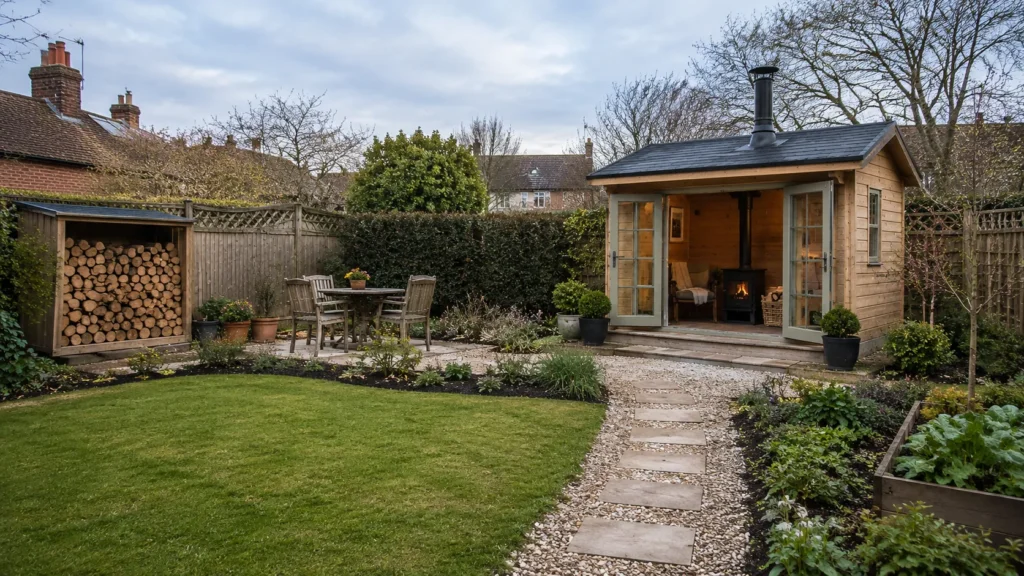
A summerhouse with a log burner should be planned as a complete space. The stove is only one part of the picture.
You also need to think about seating, flooring, access, lighting, insulation, views into the garden and the route you will take to reach the building in wet or cold weather. A warm room that is awkward to reach or poorly laid out will not get used as much as you hoped.
This is where choosing the right garden building matters. Our Lugarde and WoodPro garden buildings offer a practical starting point if you want to compare garden building styles, layouts, doors and window options before deciding how the finished space should work.
If you are thinking about adding a stove, we would always recommend speaking to a qualified stove installer before final decisions are made. From the garden building side, we can help you think through the structure, base, access and surrounding landscaping so the space feels considered from the start.
Visit our Lugarde and WoodPro garden buildings page to explore suitable options and start planning a summerhouse that works as part of the whole garden.
Think beyond warmth alone
The best garden buildings are the ones that fit normal use, not just the first week of excitement. A log burner may help extend the use of the space, but comfort also comes from proportion, access, materials, light and layout.
Our guide to the benefits of garden rooms looks at how these spaces can support work, relaxation, hobbies and everyday living. The same thinking applies here. A summerhouse should have a clear purpose, not just a nice stove in the corner.
In summary, can you put a log burner in a summerhouse?
Yes, a summerhouse log burner can be a lovely addition, but only when the building, stove and installation are properly planned.
Before going ahead, make sure the summerhouse is suitable, the stove is correctly sized, the hearth and wall protection are appropriate, the flue is professionally designed, ventilation is adequate, and a carbon monoxide alarm is fitted.
A stove should make the summerhouse easier to enjoy, not harder to manage. Start with the building, get professional stove advice, and plan the heating as part of the whole garden design. That is how you create a space that feels warm, safe and genuinely useful for more of the year.
Reviewer note: Reviewed by the Eden Landscapes team for garden building planning, layout and practical use. Stove installation, flue design and certification should always be confirmed by a qualified stove installer.