
This article provides general information only and is not insurance or financial advice. Check your policy wording and schedule, or speak to your insurer, for confirmation of your own cover.
A garden shed can end up holding far more value than expected. Lawnmowers, bicycles, power tools, garden furniture and seasonal equipment can all add up quickly.
In many UK home insurance policies, a shed can be covered, but not necessarily in the same way as the main house. The structure may fall under buildings insurance, while belongings kept inside may fall under contents insurance. Separate limits, exclusions and security conditions can apply.
Start With Two Questions: The Shed or Its Contents?
The first step is to separate the building from what is stored inside it.
The Financial Ombudsman Service guidance on home insurance says buildings policies usually include outbuildings such as garages and sheds, while also advising consumers to check exactly what their individual policy covers.
Contents insurance deals with possessions rather than the structure itself.
| What needs protecting? | Cover that may apply | What to check |
| Shed walls, roof and structure | Buildings insurance | Whether outbuildings are included and which events are covered |
| Garden tools and equipment | Contents insurance | Outbuilding contents limit |
| Bicycles and e-bikes | Contents or separate cycle cover | Single-item limits and security conditions |
| DIY tools | Contents insurance | Value limits and exclusions |
| Trade equipment | Policy dependent | Whether business property is included |
| Wear and deterioration | Commonly excluded | Maintenance and gradual-damage exclusions |
Having home insurance does not mean every loss involving a shed will fall within the same limits or conditions.
How Much Cover Applies to Things Stored in a Shed?
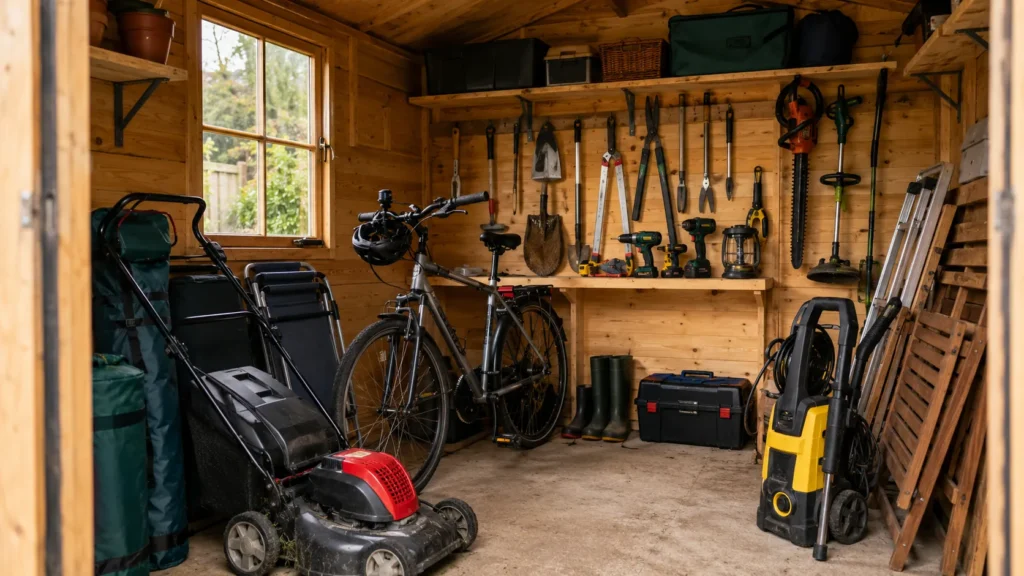
Your total household contents limit may not be the amount available after a theft from an outbuilding.
Some policies set a separate maximum for possessions kept in sheds, garages and similar structures. MoneyHelper currently lists £2,000 or more for theft from outbuildings among the features to look for in a good contents insurance policy.
That figure is a comparison benchmark, not a minimum amount every insurer must provide.
Now consider what is actually in your shed:
- lawnmowers
- hedge trimmers and strimmers
- cordless power tools
- bicycles and e-bikes
- camping equipment
- pressure washers
- garden furniture
- children’s outdoor equipment
A simple inventory can help you compare the approximate replacement value with the outbuilding limit shown in your own policy.
Theft Cover May Depend on Security Conditions
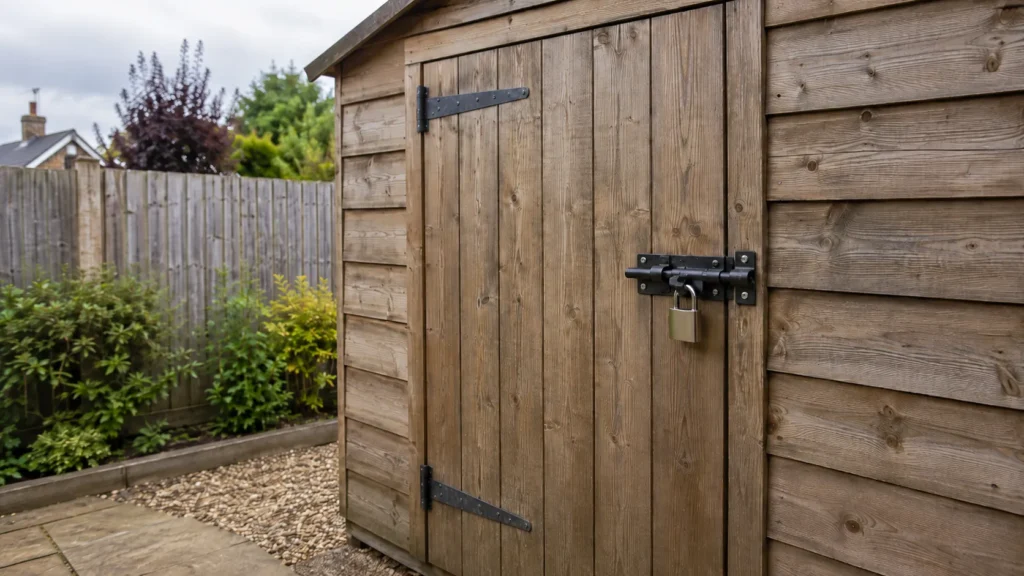
A locked shed is sensible, but a padlock alone does not guarantee that a theft claim will be covered.
Policy wording can include conditions relating to locks, windows, bicycles and how entry was gained. The exact requirements vary.
Before storing valuable equipment, check whether the policy specifies:
- a particular type or standard of lock
- requirements for windows or other access points
- separate locking conditions for bicycles
- whether evidence of forcible or violent entry is required
- different conditions when the home is left unoccupied
There is no single shed lock that automatically satisfies every insurer. If a requirement is unclear, ask your insurer rather than relying on general shed-security advice.
High-Value Items Can Have Additional Limits
A bicycle, e-bike or expensive piece of equipment can be subject to more than the outbuilding limit.
Contents policies may have single-item limits, and particularly valuable possessions may need to be specified separately. Cover away from the home can also be different from cover while an item is stored in the shed.
For a higher-value item, check:
- the outbuilding contents limit
- the single-item limit
- whether it needs to be specified
- any security requirements
- whether cover applies away from home
This is more useful than assuming that every item inside a locked shed receives the same protection.
Are Work Tools Covered?
Possibly, but household and business property can be treated differently.
If you keep tools, stock or equipment used for work in the shed, check whether your home policy includes them and whether separate limits apply.
The same principle matters when a shed changes from simple storage into a workshop or another space used for business. The building may look unchanged from the garden, while the way it is used has become materially different.
Storm Damage to a Shed Needs Particular Attention
Storm cover is an area where checking the exact wording is especially important.
MoneyHelper warns that many insurers may exclude garden sheds and other outdoor structures from storm cover unless the relevant cover applies. Its guidance on home insurance after storm damage also explains that insurers consider whether damage was caused by the storm itself or whether existing wear and maintenance issues contributed.
That means you should not assume a buildings policy automatically covers every form of weather damage to your shed.
For timber buildings, problems that develop gradually can include:
- deteriorating roof felt
- rotten boards
- persistent damp
- failed seals around windows
- water collecting around the base
- doors that no longer close correctly
Regular upkeep remains worthwhile whether or not a particular event is insured.
Our guide to shed maintenance before winter covers practical checks before wetter and windier conditions arrive.
If moisture is already becoming a concern, our guide to waterproofing a garden shed looks at roofing, ventilation, drainage and timber protection.
Maintenance cannot guarantee that an insurer will accept a future claim. It simply helps keep the building in better condition and may make it easier to distinguish sudden damage from long-term deterioration.
Choosing a Shed When Security Matters
If you are replacing an ageing shed, storage capacity is only one feature worth comparing.
Door construction, hinges, windows and locking arrangements also deserve attention when bicycles, tools or other valuable belongings will be kept inside.
One security-focused option available from Eden Landscapes is the Security Apex garden shed. Its listed standard features include galvanised bolted hinges, a security bolted padbolt protector and an internally glazed security window.
Those specifications do not mean the shed is insurance-approved, nor do they guarantee that it meets a particular insurer’s requirements.
Before choosing a security-focused shed, compare its listed door, hinge, window, and locking features with any security conditions in your home insurance policy. That keeps the product specification and the insurance decision separate.
Do You Need to Tell Your Insurer About a New Shed?
There is no safe universal answer because notification requirements depend on the policy.
Check your documents when you add or substantially change an outbuilding, particularly if:
- the new shed is significantly larger
- the value stored outside has increased
- it will contain expensive electrical or hobby equipment
- it is being used as a workshop
- it stores business equipment
- its use has changed since the policy began
If the policy does not make the position clear, ask the insurer before assuming that no notification is necessary.
What If You Rent Your Home?
If the shed forms part of a rented property, buildings insurance will normally be the landlord’s responsibility. Your own belongings are a separate contents-insurance matter.
A landlord’s insurance should not be assumed to cover your bicycle, tools or other possessions simply because they are stored in a shed belonging to the property.
If you want to install your own shed, check your tenancy agreement and obtain any permission required. You should also check how your contents insurer would treat possessions stored there.
A Quick Shed Insurance Checklist
Before relying on your policy for a shed or what is inside it, check:
- Is the shed included within the definition of buildings or outbuildings?
- Which causes of damage are covered for the structure?
- Is storm damage to the shed included or excluded?
- How much contents cover applies specifically to outbuildings?
- Is there a single-item limit?
- Are bicycles and e-bikes subject to separate conditions?
- Are business or trade tools included?
- Does the insurer specify particular locks or security measures?
- Is accidental damage included, optional or excluded?
- What excess would apply?
- Does the insurer need to know about a new shed or change of use?
For higher-value belongings, keeping photographs, receipts and serial numbers where available can also help document what you own.
If You Need to Make a Shed Insurance Claim
Contact the insurer as soon as reasonably possible and follow the claims procedure in your policy.
Depending on what happened, useful evidence can include:
- photographs of damage or signs of entry
- receipts or other proof of ownership
- serial numbers
- repair estimates
- a police crime reference number where relevant
- copies of your policy documents
Check with the insurer before disposing of damaged property unless keeping it would create an immediate safety risk.
If a claim is rejected, ask which policy term, limit or exclusion the insurer is relying on. If you disagree with the decision, use its formal complaints process.
If the complaint remains unresolved after the insurer’s final response, the Financial Ombudsman Service may be able to consider it. You generally have six months from the date of the final response to refer a complaint, although exceptions can apply.
Know What Is Covered Before You Rely on It
A garden shed can be covered by home insurance, but there is no blanket rule that every structure, item or type of damage is included.
Buildings insurance may cover the shed itself. Contents insurance may protect possessions kept inside. Separate outbuilding limits, security conditions, single-item limits and exclusions can all affect the outcome.
Review the policy when you install or replace a shed and again if the value or type of belongings stored there changes.
Physical security and insurance cover are connected, but they are not the same thing. The shed can help protect what you own; the policy wording determines what the insurer has agreed to cover.