
A fresh colour can turn a practical garden shed into a feature that feels properly connected to the rest of the space.
The right shade can complement your paving, soften the appearance of a large building or create a calm backdrop for planting. The wrong one can make the shed feel more prominent than intended, particularly when it is visible from the house.
When choosing colours to paint a garden shed, start with the garden rather than the paint chart. Consider the materials already in place, the amount of natural light and whether you want the building to blend in or stand out.
Modern does not have to mean cold, grey or ultra-minimal. Charcoal, muted green, warm neutral and deep blue can all look contemporary when they are used as part of a simple, considered palette.
Let the Garden Guide Your Colour Choice
Before buying paint, view the shed from the places where you spend the most time.
This may include:
- From the kitchen or living room
- From a patio or seating area
- Along the main garden path
- From the garden entrance
- Against nearby fencing and planting
A large shed that dominates the view may benefit from a quieter colour that helps it recede. A smaller building surrounded by planting can often carry a stronger shade without overwhelming the garden.
The Royal Horticultural Society recommends repeated forms and a restrained palette when planning a modern and minimal garden design. The shed does not need to match every other surface, but its colour should feel connected to the materials and planting around it.
A useful first decision is whether the shed should:
- Blend into the boundary
- Provide a backdrop for plants
- Act as a controlled focal point
Once you know the role you want it to play, the available colour choices become much easier to narrow down.
Seven Modern Colours to Paint a Garden Shed
| Colour | Works well with | Overall effect | What to consider |
| Charcoal grey | Grey paving, render and dark frames | Clean and architectural | Can look heavy on a large shed |
| Soft black | Green planting and pale gravel | Bold and crisp | Dust and cobwebs may show readily |
| Sage green | Timber fencing and informal planting | Calm and understated | Avoid overly bright greens |
| Olive green | Mature shrubs and natural stone | Earthy and discreet | Can become very dark in shade |
| Warm greige | Brick, pale paving and neutral render | Soft and adaptable | Check its undertone carefully |
| Off-white | Compact or shaded gardens | Light and fresh | Mud and rain splash show sooner |
| Muted navy | Brick, gravel and white flowers | Distinctive but restrained | Better when the shed is meant to stand out |
Charcoal Grey for a Clean, Architectural Finish
Charcoal is one of the easiest shades to use in a modern garden.
It works particularly well with porcelain paving, dark-framed doors, metal furniture and simple fencing. It also creates a useful backdrop for ornamental grasses, silver foliage and fresh green leaves.
Pay attention to the undertone. A warmer charcoal often suits red brick, sandstone and brown timber. A cooler blue-grey may work better beside white render, slate and silver-coloured metalwork.
Very dark charcoal can feel imposing across a large shed. A slightly softer shade may produce a more balanced result, especially in a compact garden.
Soft Black for Strong Contrast
A black shed can look sharp and deliberate when the building has a simple shape and uncluttered detailing.
Dark walls help pale flowers and bright foliage stand out. Black can also connect naturally with modern planters, lighting, gates and window frames.
Pure black is not the only option. A softened black with grey, brown or green undertones may sit more comfortably outdoors and appear less severe in strong sunlight.
Dark finishes absorb more heat than pale ones, which may affect the coating and its maintenance requirements. The TDCA guidance on coated exterior timber recommends checking compatibility, preparation and manufacturer instructions carefully. Although the guidance focuses mainly on timber cladding, the same caution is useful when selecting a coating for a timber shed.
Sage Green for a Softer Modern Look
Sage is a good choice when you want the shed to feel contemporary without becoming the main feature.
A muted, greyed sage works well with timber fencing, gravel, herbs, ornamental grasses and pale flowers. It also remains relatively easy to coordinate as the planting changes through the seasons.
Avoid vivid emerald or grass green if you want a calm finish. Bright greens can look artificial beside natural foliage.
For a simple scheme, use the same sage shade across the walls and trim. Charcoal, black or warm white detailing can add definition, but too much contrast may make the building feel unnecessarily busy.
Olive Green for a Shed That Blends In
Olive is deeper and warmer than sage.
It suits gardens with established shrubs, evergreen planting, natural stone and weathered timber. Against dense planting, olive can help a larger shed settle into the background.
The shade can change noticeably according to the light. It may appear warmer in direct sun but look brown or almost charcoal on a shaded wall.
Test the paint on more than one side of the shed before committing to the full building.
Warm Greige for a Neutral Scheme
Greige sits between grey and beige, making it useful where a garden combines warm and cool materials.
It can link brickwork, pale paving, timber furniture and neutral render without matching any of them exactly. Greige feels warmer than a cool grey and cleaner than a traditional brown stain.
Its undertone matters. A beige-based greige may clash with blue-grey paving, while a cooler version can look flat beside warm red brick.
Place the sample directly beside the house, fence and paving. A colour viewed indoors or under artificial light may look very different once it is outside.
Off-White for a Small or Shaded Garden
An off-white shed can feel lighter and less bulky, which may help in a narrow or enclosed garden.
Choose chalk, stone, cream or soft ivory rather than brilliant white. Softer shades generally sit more comfortably beside planting and natural materials.
Pale finishes show mud, algae and rain splash more quickly, particularly around the lower boards. Keeping soil and plants away from the timber can make the surface easier to maintain.
A gravel strip around the base can also help reduce splashback, provided the shed’s drainage and foundation have been planned correctly.
Muted Navy for a Controlled Focal Point
Muted navy brings more personality than grey without becoming overly bright.
It works particularly well with red or buff brick, pale gravel, warm timber and white-flowering plants. Simple black fittings can keep the overall look crisp and contemporary.
Navy is best suited to a shed you want people to notice. Where the building is already large or prominent, a quieter olive, sage or greige may feel more balanced.
Should the Shed Match the House or Fence?
An exact colour match is rarely necessary.
A more natural approach is to repeat an undertone or colour family already present in the garden. For example:
- Charcoal can echo dark window frames.
- Sage can connect the shed with nearby planting.
- Warm greige can pick up colours from brick or paving.
- Navy can contrast with pale render without feeling disconnected.
- Olive can link timber walls with mature foliage.
Painting the shed and fence in the same dark shade can help the building merge into the boundary. Using two related shades creates more depth while maintaining a coordinated appearance.
Avoid matching every feature exactly. When the shed, fence, gate, furniture and planters all use the same flat colour, the garden can lose definition.
Should the Door and Trim Be Different?
A second colour can sharpen the design, but it should have a clear purpose.
Modern combinations may include:
- Charcoal walls with soft black trim
- Sage walls with warm white frames
- Greige walls with an olive door
- Navy walls with pale grey details
- Off-white walls with natural timber features
Limit the contrast to the door, fascia boards or window frames. Painting every fitting and panel differently can quickly weaken the clean, modern effect.
Using one colour across the entire exterior is often the safest choice, particularly when the shed is surrounded by varied planting.
Test the Colour Before Painting the Whole Shed
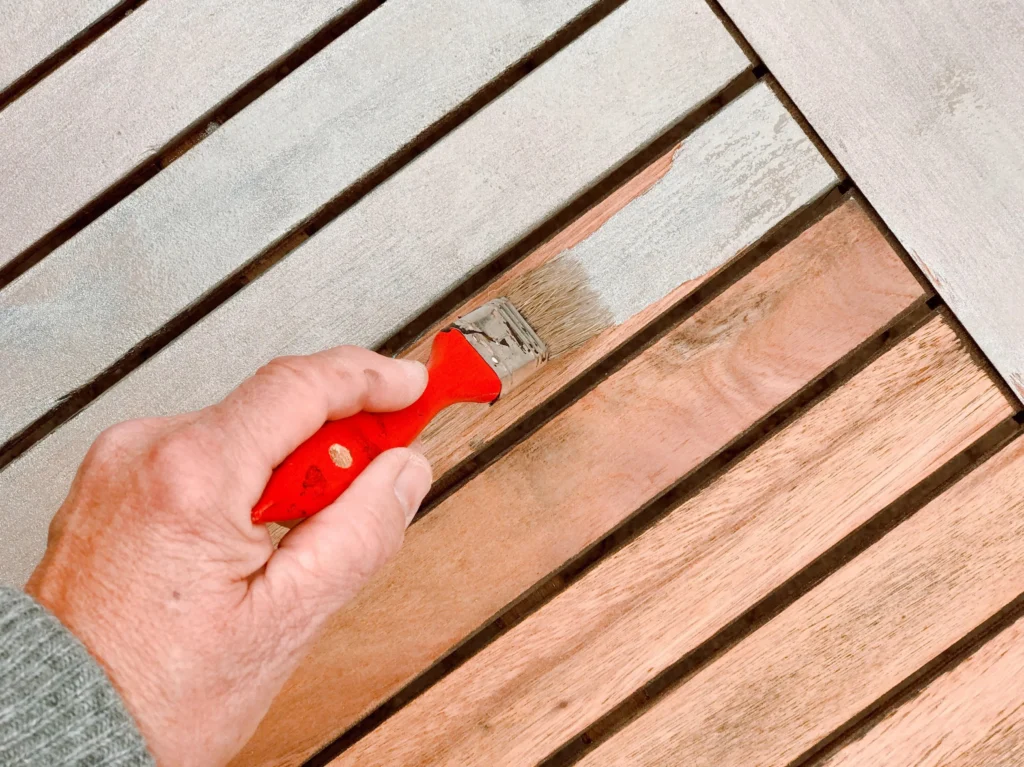
Small colour cards are useful, but they cannot show how the paint will look across a full timber wall.
Apply a sample to a spare piece of similar timber or a discreet part of the shed. Check it:
- In morning and afternoon light
- On both sunny and shaded sides
- Beside the house and fencing
- Against evergreen and deciduous planting
- After the sample has dried fully
Natural light can reveal blue, yellow, green or red undertones that were not obvious on the tin.
Testing first is especially important with charcoal, olive and greige, where subtle differences can completely change how the colour relates to the wider garden.
Check the Shed Before Repainting It
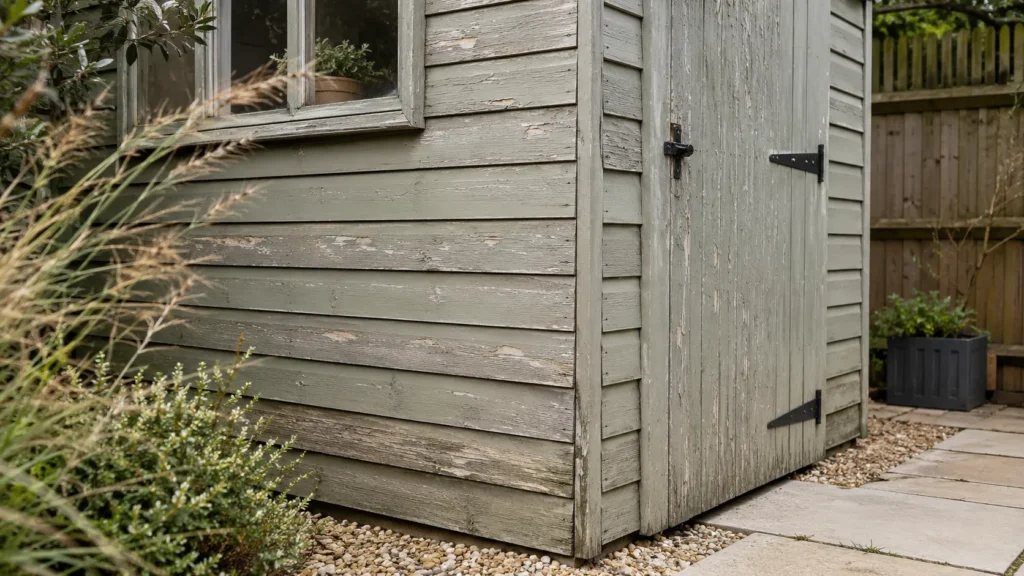
A fresh finish cannot correct damp timber, failed roof felt or poor drainage.
Before opening the paint tin:
- Inspect the roof and walls. Repair leaks, loose boards and damaged seals.
- Clean the surface. Remove dirt, algae and flaking coatings.
- Allow the timber to dry. Do not apply paint over damp wood.
- Check the existing treatment. Confirm that the new finish is compatible.
- Prepare the surface as directed. Sand or prime wherever the product instructions require it.
- Protect functional parts. Keep vents, locks and moving hinges clear.
- Record the product details. Save the colour name and batch information for future touch-ups.
Our guide to waterproofing a garden shed explains why the roof, base, ventilation and drainage should be checked alongside the timber finish.
For a broader seasonal inspection, our shed maintenance advice before winter covers the key areas worth reviewing before colder and wetter weather arrives.
Paint, Stain or a Supplied Finish?
Paint creates an opaque, consistent colour and can change the shed’s appearance completely.
A stain usually allows more timber grain and natural variation to remain visible. This can work well where a solid block of colour would feel too formal.
Choose between them according to:
- The timber and construction
- Any preservative or coating already present
- The manufacturer’s care instructions
- Exposure to sun and rain
- The level of maintenance you are prepared to undertake
Do not assume every exterior paint is suitable for every garden building. Some sheds arrive treated or finished, and an incompatible product may not adhere properly.
Ask About the Finish Before Ordering
When choosing a new timber building, it makes sense to consider the colour before placing the order. The available options will depend on the building, timber specification and manufacturer.
Eden Landscapes lists a Premium Paint/Satin Finish option among its garden shed accessories. Colour choices, compatibility, application details and maintenance requirements may vary between buildings, so these should be confirmed before ordering.
Colours can also appear differently across screens and materials. Ask for current finish information or an appropriate colour reference before making your final selection.
Explore our Premium Paint/Satin Finish option and speak to our team to check whether it is suitable for your chosen garden building.
Choose a Shed Colour That Works Throughout the Year
The best colours to paint a garden shed should still look considered when summer flowers have faded, and deciduous plants have lost their leaves.
Charcoal and soft black create a strong architectural backdrop. Sage and olive help the shed settle into planting. Greige and off-white suit lighter neutral gardens, while muted navy creates a controlled focal point.
Start with the house and hard landscaping, decide whether the shed should blend in or stand out, and test the colour on the actual timber. Choose a shade you will still be happy to see from the house in winter. Repainting a shed every time fashions change is an excellent way to lose a perfectly good weekend.