
Foundations for a garden shed are easy to treat as an afterthought. Most people start with the shed itself, such as the size, doors, roof style and storage space. The base only gets attention when installation day is close.
That is where problems can start.
A shed needs a firm, level and well-drained base. If the ground underneath is soft, damp or uneven, the shed can twist, doors can catch, floors can rot, and water can creep in. A small tool shed may not need the same base as a larger workshop, but every shed needs proper support.
This guide is general advice for choosing foundations for a garden shed. Always check the shed manufacturer’s base requirements before installation, especially for larger buildings, heavy storage or uneven ground.
Why the Base Matters
A garden shed may look simple, but it still has to deal with weight, rain, movement and changing ground conditions.
A good base should:
- Keep the shed level
- Spread the weight evenly
- Lift the floor away from the damp ground
- Help water drain away from the structure
If a shed sits directly on grass or soil, moisture can collect underneath. Over time, that dampness can affect the timber floor, lower boards and fixings. You may notice musty smells, soft patches underfoot or doors that no longer close properly.
A sound base makes installation easier and helps the shed stay usable for longer.
What Happens If the Base Is Wrong?
A poor base may look fine at first, but rain, foot traffic and natural ground movement can all change what is happening underneath.
Common warning signs include:
- Doors that scrape or stick
- Gaps around panels or corners
- Water is pooling around the floor
- Timber bearers sitting in damp conditions
- The shed is leaning or twisting
- Soft or uneven floor areas
Once a shed has moved out of square, fixing it can be awkward. You may need to empty it, lift it, rebuild the base and repair the shed afterwards. That is not ideal when it is already full of tools, pots and the box nobody wants to open.
Main Types of Foundations for a Garden Shed
No one base suits every shed. The right choice depends on the shed size, the ground and how the building will be used.
Concrete Base
A concrete base is one of the most robust options. It gives a solid, long-lasting surface and is often suitable for larger sheds, workshops or heavier garden buildings.
It works well if the shed will hold machinery, bikes, garden equipment or storage units. It is also useful where the ground needs a more permanent, stable solution.
The downside is that it takes more preparation. The area needs to be excavated, framed, compacted and poured correctly. Concrete also needs time to cure before the shed is installed. Poorly laid concrete can still create puddles, so the finish and surrounding drainage matter.
Best for:
- Larger sheds
- Workshops
- Heavy storage
- Long-term installations
Paving Slab Base
A paving slab base is a popular choice for small to medium sheds. It gives a solid surface without the same level of work as a full concrete slab.
The slabs should sit on a properly prepared sub-base, not directly on grass or loose soil. If they are simply placed on the ground, they can rock, sink or separate over time.
When laid properly, paving slabs provide good support and are easier to repair than concrete. If one slab moves, it can usually be lifted and reset.
Best for:
- Small and medium sheds
- Standard garden storage
- Fairly level ground
- A neat, practical finish
Timber Frame Base
A timber frame base can work well for lighter sheds, especially where airflow beneath the floor is important. Raising the shed slightly helps keep timber away from damp ground.
The frame should be made from suitable treated timber and supported properly. If the timber sits directly on soil, it defeats the point. It should rest on firm supports such as slabs, pads or compacted hardcore.
Best for:
- Lighter timber sheds
- Raised installations
- Areas where airflow matters
- Gardens where concrete feels excessive
Plastic Grid Base
Plastic grid bases are often used with gravel to create a stable, free-draining foundation. They are lightweight, quick to install and can suit smaller sheds well.
The grids still need proper preparation. They should not be laid over soft, uneven soil and expected to perform miracles. A weed membrane and compacted sub-base are usually part of the job.
Best for:
- Small to medium sheds
- Better drainage
- Lighter storage
- Less permanent installations
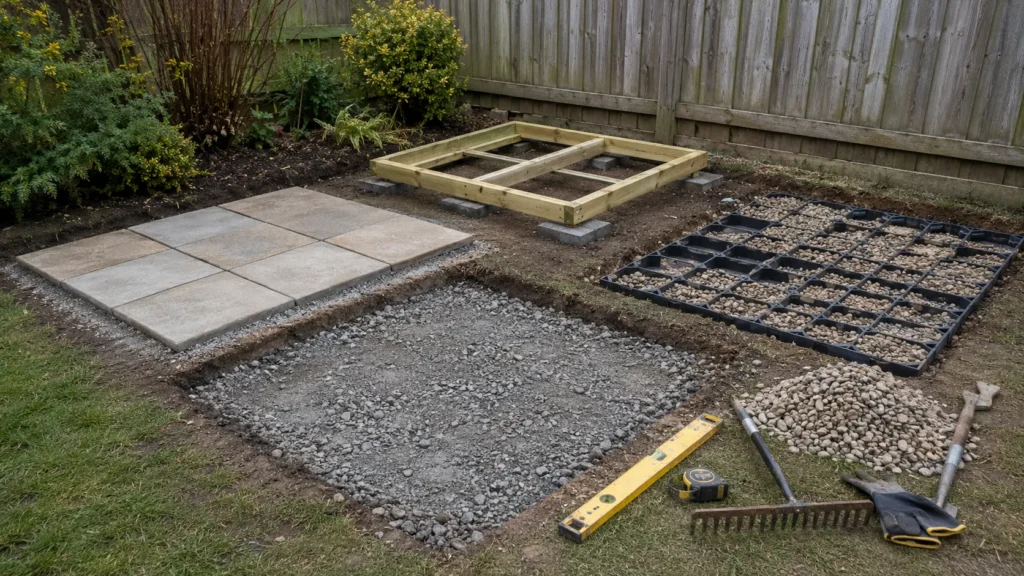
Shed Base Comparison Table
| Base type | Best suited to | Main benefit | Watch out for |
| Concrete base | Large sheds and heavy storage | Strong and durable | Needs proper preparation and curing time |
| Paving slab base | Small to medium sheds | Practical and neat | Slabs can move if laid on poor ground |
| Timber frame base | Lighter sheds | Allows airflow beneath the floor | Timber must not sit in damp soil |
| Plastic grid base | Light to medium storage | Free-draining and quick to install | Needs a firm, level sub-base |
How to Choose the Right Shed Foundation
Before choosing a base, look at how the shed will actually be used.
In practice, the decision usually comes down to three checks: how firm the ground is, how water moves across the area and how much weight the shed will need to carry. If one of those points is ignored, even a good shed can become awkward to use over time.
1. Think About Shed Size
The larger the shed, the more important the base becomes. A small storage shed may sit well on a properly laid slab or grid base. A larger shed needs stronger support across the full footprint.
If you are comparing larger or more permanent garden buildings, our Lugarde and Woodpro garden buildings range is a useful reference point when thinking about structure, size and base preparation.
2. Consider What You Will Store Inside
A shed used for a few hand tools is different from one used for bikes, lawnmowers, machinery or heavy shelving.
The heavier the contents, the stronger the base needs to be. If the load is uneven, the foundation needs to spread that weight properly.
3. Check the Ground Conditions
Soft, wet or sloping ground needs more preparation. Clay-heavy ground can hold water, while loose soil may settle after the shed is installed.
The RHS explains that clay soils can be slow to drain, which is worth considering if the area stays damp after rain.
Before any base goes down, the area should be cleared, levelled and compacted. Rushing this stage is one of the easiest ways to create future problems.
4. Plan for Drainage
Water should move away from the shed, not gather around it. The base should be level for the shed itself, but the surrounding area should not encourage puddles against the timber.
GOV.UK guidance on permeable surfacing and rainfall runoff is aimed at paved areas around homes, but the same basic idea is useful here: hard surfaces should be planned so rainwater can drain rather than collect.
If damp is already a concern, our guide on how to waterproof a garden shed is a helpful next step once the base has been planned.
5. Allow for Access
Think about how the shed will be installed and maintained. You need enough space to build it, open the doors and treat or repair the sides later.
A base tucked tightly against fences, walls or dense planting can make future maintenance difficult. Good access now saves trouble later.
Match the Base to the Shed You Choose
It is worth thinking about the base before you commit to the shed itself. A compact timber shed for garden tools may only need a simple slab or grid base. A larger workshop-style shed will usually need something stronger.
A sensible starting point is to look at shed size, weight and intended use together. The foundation is not separate from the shed choice. It helps the shed sit squarely from day one.
If you are still comparing options, browse our range of garden sheds to get a clearer idea of the size and style that suits your garden. Once you know what type of shed you want, it becomes easier to plan the right base beneath it.
Step-by-Step: What a Good Shed Base Needs
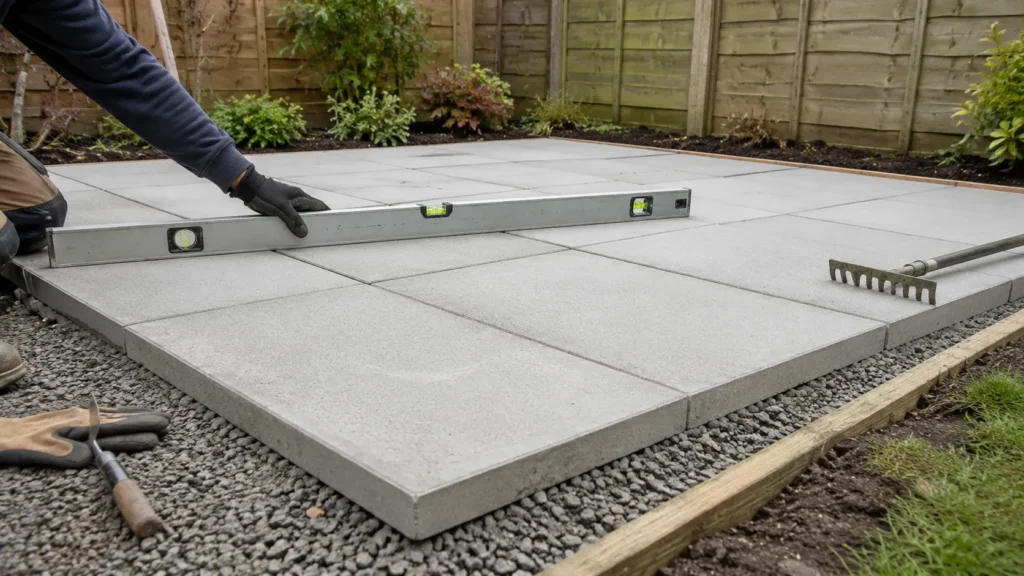
A shed base does not need to be complicated, but it does need to be done in the right order.
- Choose the position: Pick a practical spot with good access and drainage.
- Mark out the footprint: Measure carefully and check that the base is square.
- Remove turf and loose soil: Build on firm ground, not soft topsoil.
- Add and compact the sub-base: This helps spread the load and reduce movement.
- Create the finished surface: Use concrete, slabs, a timber frame or a grid system.
- Check before installation: Look for dips, loose areas or places where water could collect.
It is far easier to correct the base before the shed is sitting on it.
Should the Base Be Bigger Than the Shed?
Not always.
A base that is much larger than the shed can collect rainwater around the edges. If water sits on the base and runs under the shed, it can affect the timber floor and bearers.
In many cases, the base should match the shed footprint closely or be designed so water cannot pool against the building. The aim is simple: support the shed without creating a water trap.
Do You Need Building Regulations Approval?
For many small detached sheds, building regulations will not usually apply, provided they meet the relevant conditions. The Planning Portal explains that building regulations for outbuildings can depend on factors such as floor area, boundary position, materials and whether the building includes sleeping accommodation.
That said, the base still matters even where formal approval is not required. A lightweight shed can still fail early if it is placed on poor ground.
Common Mistakes to Avoid
Even a good shed can struggle if the base is badly planned.
Try to avoid:
- Laying slabs straight onto grass
- Building on soft or recently disturbed soil
- Ignoring drainage around the shed
- Making the base uneven and hoping the shed will settle
- Using untreated timber in contact with damp ground
- Choosing a light base for a heavy shed
- Forgetting access for maintenance
- Letting soil or plants build up against the lower boards
In Summary
Foundations for a garden shed should be firm, level and well-drained. Concrete is strong and long-lasting. Paving slabs are practical for many standard sheds. Timber frames can help with airflow when properly supported. Plastic grid bases can work well for lighter sheds where drainage is important.
The best choice depends on your shed size, ground conditions and intended use. Get the base right first, and the shed has a far better chance of staying dry, square and useful for years.
Before you choose the shed, think about what it will stand on. The base may not be the bit anyone gets excited about, but it is the part quietly doing all the hard work.